


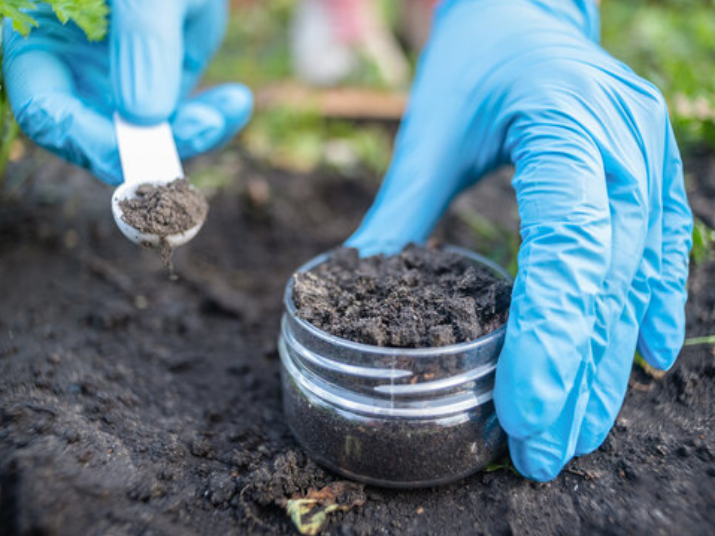
Benefits of Soil Testing
- Detects nutrient deficiency.
- Knows the exact amount of nutrients to be used.
- Knows the appropriate amount of fertilizer required.
- The cost of cultivation is low, it saves money.
- Increases yield.
- The soil remains healthy.
- Ground water is not contaminated.
- Increases the income of farmers.
- Improves crop health. Detects soil’s pH level.
How to Take Soil Sample
- The first thing to do is to clear the grass from the ground.
- Prepare V shaped pits about 6 inches deep in 4 to 5 places and take soil samples from them.
- Collect and mix the soil taken from 4 to 5 places at one place.
- Now prepare 1 mix sample of about half a kilo (500 grams) of that soil.
- If the sample contains pebbles or grass etc., clean it and keep it to dry in the shade for some time. Keep this soil sample filled in a clean cloth bag along with the name of the farmer, the name of the farmer’s father, the name of the field, Land record number, the address, your name, the name of the father, the mobile number, inside the label of the sample.
Precautions While Taking Soil Samples
- Do not take soil sample from a place where there is already a pit.
- Do not take samples from near the obstruction of the farm and the road adjoining the farm and from where the fence is placed.
- Fill all the details in the label and information slip.
- Fill the sample from the ground 3 to 5 days before giving the sample.
- Be careful not to give wet soil samples.
- If the soil is too wet, leave it to dry in the shade for 3 to 5 days, then give the sample.
- If the sample is to be taken from standing crop, then take the soil sample from the empty space between the rows of plants.
Reviews
There are no reviews yet.